For thousands of years, wildlife trackers have solved one of the most difficult problems imaginable. How do you find something when you don't know exactly where it is?

The animal they seek is wild — and it is moving. The environment is constantly changing. The signs are faint. The information is incomplete.
And yet, day after day, they achieve what seems impossible.
They find what they are looking for.
Watching master trackers at work, it becomes obvious that their success has very little to do with luck. Nor is it simply a matter of technical skill.
What separates exceptional trackers from average ones is their mindset. Their way of thinking. Their approach to uncertainty. Their ability to interpret reality and respond appropriately.
This is where leaders can learn from trackers. Because organisations today face a challenge remarkably similar to that faced by a tracker.
- Markets shift.
- Customer needs evolve.
- Competitors emerge.
- Technology changes.
- The future remains stubbornly difficult to predict.
Like trackers, leaders rarely have complete information. They must make decisions, allocate resources and set direction despite uncertainty.
The challenge is not actually in finding answers. It is knowing how to think when the answers are not yet obvious.
Over many years of working alongside master trackers, we identified five mindsets that consistently appear in those who are most successful.
1. Discernment
Every tracking journey begins with finding the right track to follow. An experienced tracker may examine dozens of signs before committing to one.
They understand that choosing the wrong track at the beginning can waste hours of effort.
Discernment is the ability to separate the essential from the non-essential. It allows the tracker to identify the right track to follow and where best to invest their time and energy.

In a world overflowing with information, leaders need this mindset more than ever.
The trap here is impulsiveness: mistaking activity for progress.
2. Curiosity
Once on the trail, the tracker becomes like a detective at work. Every footprint, broken branch and subtle disturbance provides another clue.
Curiosity fuels the desire to understand what is really happening.
Great leaders do the same. They ask questions. They challenge assumptions. They remain open to information that does not fit their current view.
The trap is hyperfocus: becoming so fixated on one thing that you stop seeing the bigger picture.
3. Practical Imagination
To close the gap with the animal there comes a time where the tracker makes a bold decision. To stop following the spoor step-by-step and to leapfrog ahead.
Essentially the tracker is saying: "Based on everything I have learnt so far, I think I know where this animal is going." It is a calculated risk.
Practical imagination is the ability to combine logic with creativity, evidence with possibility, and analysis with action. It allows the tracker to move beyond what is known and act on what is likely.
The best leaders do not simply analyse. They synthesise. They take incomplete information, connect seemingly unrelated dots, form a hypothesis about the future and then act.
The trap is rigidity: becoming attached to a single view of reality and not seeing other possibilities.
4. Adaptability
Every tracker, at some point, loses the trail.
The question is not whether it will happen. The question is what happens next.
Experienced trackers understand that losing the track is not failure. It is feedback. They slow down, reassess their assumptions, incorporate new information and adjust their approach.
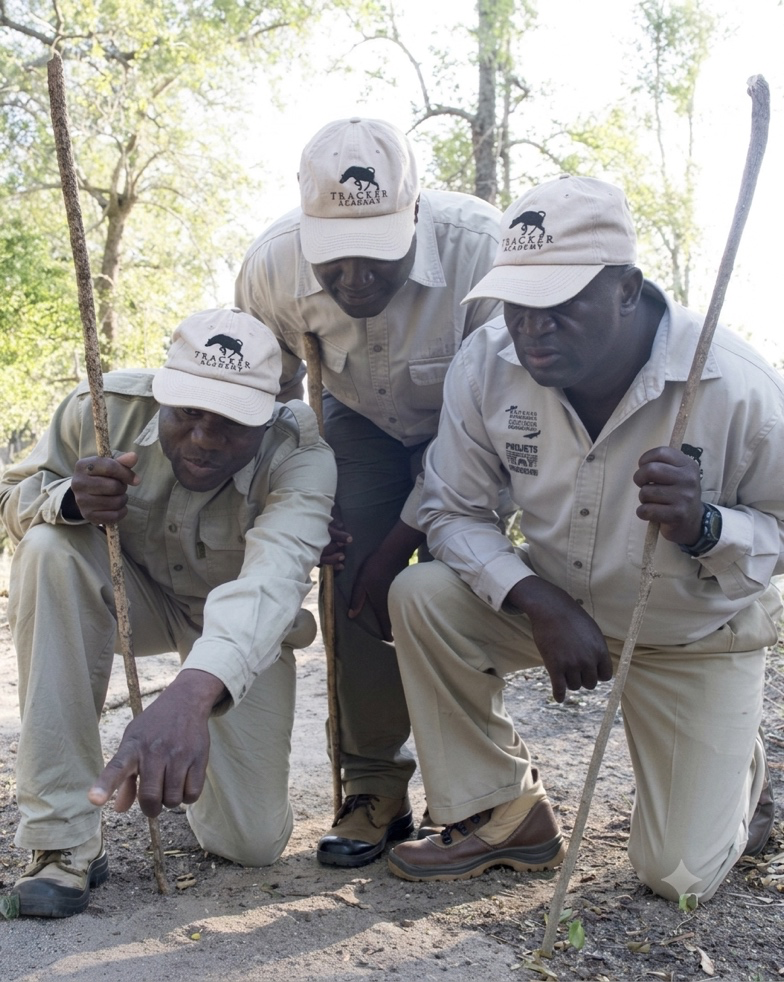
Effective leaders do the same. They understand that success is not about always being right. It is about learning quickly when reality proves them wrong.
Adaptability is the willingness to update your thinking, adjust your course and move forward with new understanding.
The trap is hubris: becoming so convinced you are right that you stop learning from reality.
5. Reverence
An encounter with the animal is the tracker's reward.
The measure of success is ensuring the encounter is a good one. One that does not frighten or endanger either party. But that creates the conditions for trust, and future success.
Reverence is the mindset that makes this possible. It is a deep form of respect, appreciation and stewardship.
Great leaders operate in much the same way. They understand that organisations are built on things that cannot be taken for granted: customers, people, culture, reputation and trust.
These are the real assets that must be protected and nurtured.
The trap is contempt: the belief that something or someone is beneath your respect or consideration.
The Leadership Challenge
Whether you're leading a business, building a team, navigating change or pursuing a big goal, the challenge is often the same.
- The path is unclear.
- The information is incomplete.
- The outcome is uncertain.
The real test of leadership is not whether uncertainty and ambiguity exists, but how you respond to it.
The tracker's mindset offers a framework — not for eliminating uncertainty, but for navigating it with skill, confidence and wisdom.